Creating a fun environment for students is crucial, allowing them to share their knowledge. I wish to avoid class sessions full of me presenting a PowerPoint. Therefore, I try to find ways for the session to be engaging. I began using Kahoot a few months ago and found it a great tool to do check-ins with the students without being formal. Using Kahoot quite regularly, I monitored what areas needed further focus and which students were struggling with. I run Kahoot in two forms, groups and individuals. When the session is in group games, it becomes more of a competitive game for students, resulting in the class becoming more lively.
Singer (2016) stated that by 2016, 20 million users were using Kahoot, which have doubled by 2022 and has been associated with the pandemic and the movement to online classes. This shows the inclusive education approach, not only in the classroom but also online. However, Kapp (2012) advises not to become too dependent on this as an education tool, as it needs to be meaningful and to challenge and promote feedback. As Kapp (2012) explains, simply repeating it to offer can flatten interest and engagement levels. With Kahoot quizzes, I have to be mindful that it is not overused. As it can then become boring for students. By using this as a part of my check-in with students.
Boller (2012) states that forty years of research showcase that people learn from games and that it is an effective tool for education. I use Kahoot for assessment reviews; for example, for my international students, I use it as a check-in, especially whether there is any confusion over the assessment guide or objectives. When anyone answers it incorrectly, the students do not feel so singled out, as it’s in a group setting, and they are awarded points as a group. I am also about then do a re-cap session for the students. As the students are based in China, having an interactive game also breaks up the teaching session online.
Becker (2001) states the value of games as a vehicle for teaching concepts while inspiring students is now well-accepted at almost all levels of education. Plump and LaRosa (2017) explain the interaction game gives student immediate feedback and credits the students engagment. In a way encouraging others to get involved, as they may feel they are missing out on the fun, and engagement level if not taking part. Furthermore, Plump and LaRosa (2017) explain that students like the idea of the anonymous aspect, as fake names can be used to remove any pressures of getting the right answer. Also removes the fear of what others may think if they are incorrect.
Reference list.
Becker, K. (2001). Teaching with games: The minesweeper and asteroids experience. Journal of Computing in Small Colleges, 17(2), 23 33.
Kapp, K. (2012). The gamification of learning and instruction: Game-based methods and strategies for training and education. San Francisco, CA: Pfeiffer.
Plump, Carolyn & LaRosa, Julia. (2017). Using Kahoot! in the Classroom to Create Engagement and Active Learning: A Game-Based Technology Solution for eLearning Novices. Management Teaching Review. 2. 237929811668978. 10.1177/2379298116689783.
Attending the training in Romania provided an opportunity for discussion with other academically from the EU on the different struggles they experience within academia as well as the techniques they use to overcome these. In the course, there was an exploration of what academic leadership is and the different types of leadership, and recognising that multiple approaches as settling for one may not be suitable for all environments and circumstances. There are several approaches which I have learned which will be embedded into my working practice moving forward.
Introduction to academic leadership
The first day introduced leadership with academia and allowed those attending to explore what leadership meant to us. One core theme from the discussions was that we all expected leaders to support and assist the team’s growth. In the session, we explored the difficulties associated with this expectation, as leaders are there to support team and individual development. In addition, how vital empowerment and encouragement are for staff. It is estimated that 79% of employees will leave or begin to seek alternative employment after receiving inadequate appreciation from their management. Thus, it suggests the importance of leaders regularly getting to know and engaging with their team. Developing a solid relationship could reduce the need to seek appreciation elsewhere. A key theme of this was emphasis within academia; due to understaffing and over-recruitment in students, there was a question on whether staff feel appreciated for handling these issues or it becomes simply an expectation. If the latter becomes a demoralising environment, prompt seeking employment elsewhere.
As well as this, it was recognised that 35% of people identify their boss or management as one of the sources of stressors at work. This was due to the lack of engagement and more of a dictatorship approach to leadership. It was recognised that management or leaders might not be aware of the work pressures that a dictatorship approach places others under, suggesting alternative methods may be more suitable. One of the stressors explored was the inability to communicate effectively as a team with the leader, suggesting a barrier between them. Suggesting that within academia, this is an area which needs to be addressed.
Different leaders are accounted for within academia, managers, heads of schools, senior academics, VC and administrative leaders. Regardless of their level of leadership, a focus on environmental growth and development for staff will improve the stress levels and working environment. All leaders should obtain four key areas – planning, risk-taking, motivation and processing. Leaders should be able to provide clear and informative plans that inform staff and allow those to share and query the planning process.
Leadership Shield
As a cohort, we were invited to create a leadership shield, whereby we needed to consider the two leadership skills we felt were essential and two values of influence on how you would lead others. Finally, an accomplishment we felt proud of. A wide range of answers was provided for the shield focusing on the leadership skillset we felt was needed for effective leadership as well as demonstrating what values impacted our approaches to leadership
Leadership skills
The need to be a people person
Authentic
Good planning
Active listening
Effective communication
Knowing your team and involving them
Strategic processes
Open
Good listener
Organised
Risk-taking
Motivating people
Values that influence your leadership
Kindness
Accountability
Honesty
Empathy
Communication
Empathic
Trustworthy
Space to reflect
Creativity
Friendly and approachable
Delegating
Trust within others
Freedom
Fairness
Respect
Flexibility
Communication
Academia often replies to emails to communicate, and sometimes there is misinformation or miscommunication. Also, it is different from recognising the tone of the email; therefore, this could be easily read. Therefore, as a leader, it is essential to identify practical communication tools for the team. In particular, when referring to feedback, as noted above as many seek new employment if they do not feel appreciated. In our discussions, we commented on the lack of conciseness sometimes in emails and the lack of clarity sometimes provided. It was recommended for the sender to think before they send. What are they trying to say? What is the purpose of this email?
Following the principles of the seven Cs of communication – clarity, conciseness, concreteness, correctness, completeness, consideration and courtesy- it was emphasised how these are not followed accordingly in some situations. Thus, there needs to be a stronger emphasis on these:
Clarity
Have a clear set of goals provided for personal development.
Using SMART goals – in particular, establishing a time frame of completion
Reducing overcomplicating the message and ensuring the team members are aware of what is expected of them.
Conciseness
To the point and direct
Avoid the need for unnecessary meetings when an email could summarise the key points
Use of bullet points rather than full paragraphs.
Reducing the jargon and irrelevant points
Concreteness
Important facts presented first
Use of an agenda in meetings to ensure focus on the message
All facts and important information is provided
Correctness
Communication should be actual
Direct and limited if no grammar or spelling errors
Inclusion of the right people in emails, ensuring the issues and information is being direct to the right person
Completeness
Provision of all the facts
No vagueness
Does not leave room for interpretation
Consideration
Who is the audience
Consider their level of expertise and knowledge
Avoid patronising
Involving the audience and asking their viewpoint
Courtesy
Courteous manner
Use their preferred name
Avoid passive tones
Open and honest
If you do know the answer, say this, do not try and develop a misguided reply
There are several barriers impacting communication, in particular since Covid-19. Whereby more colleagues are hybrid, most communication is online or via email. This suggests there may be a disconnect with effective communication as we have become too dependent on quick-firing emails rather than picking up the phone or having a face-to-face meeting. Time and distance are becoming a common issue in academia, with timetabling and student number impacting the ability for staff to physically all attend one meeting. This impacts effective communication and the team dynamic, resulting in more silo working environments within a department. Another barrier mentioned was the perceptual barriers, which influence how messages are interpreted. Therefore, moving forward, further team building exercises are recommended to break these barriers down to also filter the issues which could lead to miscommunication or assumptions within communication
Emotional barriers were also explored. Relationships between a team are the foundation of the courses and department. Many staff feel overwhelmed at certain times of the year, so an emotional barrier could form. These include anxiety, pain, anger and pride. Anger is the most common, as people become defensive over their work, particularly in academia, whereby teaching teams are often moved around, or module leadership is reallocated. This could cause friction; therefore, leaders need to be equipped to communicate effectively to reduce the team’s anger. Anger leads to limited production, loss of logical discussions, and difficulties within the team moving forward. Pride is again linked to anger. Many feel difficulty in letting projects they worked on, which can be seen as an ineffective approach to communication as pride prompts a focus on themselves rather than the team. Reducing active listening leads to others feeling less engaged.
Anxiety is difficult to overcome, as certain situations could prompt anxiety. Therefore, leaders need to consider how to remove the emotional aspects of a problem. Allowing the team to share their views and develop a brainstorm which could be a visual aid for them to release some of their tensions. It is recognised that anxiety may need further long-term support beyond effective communication.
Betari Box
The Betari Box, a simple tool, could be used to overcome some of these barriers. It can help establish the impact of the attitudes and behaviours of others and what impact the situation or surroundings has on a person. For example, when a member of staff is questioning the judgment of another, it can be easy for that person to become defensive. Instead, active listening could be a way forward, listening to their ideas, and establishing whether they thought about it from a different angle. Coming off as defensive impacts the relationship between colleagues, reducing the ability to build a trusting relationship. By using Betari Box, it could break the vicious cycle.
The Betari Box shows that one person’s attitude and behaviour influence and impact another. Therefore, changing your behaviour and attitude will positively change the other person. However, this may not be effective in all cases, as regardless of the positive attitude and behaviour adopted, the other person’s approach may remain harmful. Nevertheless, the Betari box showcases that a positive attitude towards a situation can unconsciously change behaviour. Behaviour refers to actions, including body language. The other person then reacts to this, as perception is formed based on your attitude and behaviour response. To effectively use this approach, there needs to be a break within the change, a decision point on where and how the attitude and/or behaviour will change by one of the parties.
Emotional Intelligence
In the session, we discussed and explored our own emotional intelligence and the ability to solve problems and act accordingly. One key area explored was the importance of providing empathy within the workload. Due to the high-level stress associated with academia and having to balance personal or home life, empathy is a core value that needs to be embedded within the workload. Compassion and cognitive and emotional empathy are required. Compassionate empathy offers sympathy to the situation; cognitive provides an understanding of the well-being and mental state of the person. For instance, managing yourself in their shoes can be challenging. Finally, emotional empathy involves discussing and feeling the distress and emotions felt by a person. Good emotional intelligence can provide the ability to offer empathy and understand others’ emotions. As a leader, this can assist in the development process within the team and assist in the team development. They also need to be self-aware of their emotions so they do not negatively impact the team. However, the leader demonstrating passion and showcasing their limitations can positively encourage and empower the team.
Motivation, as noted above, is a core aspect of emotional intelligence, and being motivated in the workplace will assist the team in working together to achieve goals. However, it is essential to note that everyone may have different motivations within the team; therefore, leaders need to source what encourages or motivates people to complete tasks and goals. This also links with the social learning theory – of Bandura 1977, which we explored. The concept is that the mental state is essential for learning, and learning does not always mean that behaviour changes will occur. Instead, focusing on personal factors, environment, and behaviour must be considered to format a change and motivate people. As pointed out above, communication is critical. Leaders need to have social skills that allow them to build a relationship with their teams effectively.
Feedback
As a leader, there will be times when different forms of communication will be provided. In training, a prompting question was asked of why we need to shift the balance of feedback from evaluation to descriptive. Evaluation is a summary of feedback – good, excellent or needs improvement. Meanwhile, descriptive feedback provides an ongoing conversation and showcases the specific tasks or goals needed to be focused upon for improvement. Hence, the need to establish good relationships with the team to understand the goals of the team members and how can the leader improve them to meet their needs. The session explored our feedback experiences and what approaches worked best for us.
Descriptive feedback was preferred. It allowed an insight into the strengths. For example, using phrases such as “I noticed that…” or “this is quality work because..”. Again, showcasing the promising approaches to the work that has been completed. As noted, appreciation was one area lacking within academia; therefore, positive reinforcement of the work completed. Following this, we discussed how we would prefer to have the areas we need to improve upon approaches. This will not place the improvements in a negative light. For instance, phrases such as “your thinking shows…”, “when explain you may wish to consider…”.
Another approach which was mentioned was the improvement strategies which could be adopted. For example, “your next step might be” or “you might have better results if you try”. Again, positive responses to improvement. Linking to this is the importance of active listening, which was explored within the session:
Pay attention –
being aware of the situation
put aside the distractions
Spend time with your staff and consider the importance of the environment the meeting is, are you committing to solely that meeting?
Show that you are listening
Use body language
Use facial expressions
Open posture
Encouraging with small verbal confirmations
Provide clear feedback – avoid jargon
Reflective
Clarity key points
Summarise comments
Defer judgement
Allow speaker to finish
Do not court argue
Feedback effectively
Respond appropriately
Honest
Assert your opinion in a kind manner
Treat others with respect
Show empathy
Co-creative approach and delegation
One effective way explored in training was developing an environment that provides shared leadership. Allowing an environment where people feel confident and comfortable sharing with others and feeling their voices are heard. The idea is to emphasise the importance of teamwork and collaborative approaches. In addition, to share responsibility which in terms shares success. The concept focuses on bringing people together to share leadership approaches and encourage the team to work on their group approaches. Furthermore, working together to source solutions as a team encourages people to voice their views respectfully, without a dictatorship.
A co-creative approach is recommended as it showcases the importance of building connections and relationships within the team. As Malcolm Parlett (1991) explained, “when two people converse or engage with one another in some way, something comes into existence which is a product of neither of them exclusively. . . . A shared field, a common communicative home, is mutually constructed. The guidance of co-creative approaches is – togetherness, shared accountability and here-and-now development. Firstly, together shows dependence upon one another. Accountability focuses on the contribution of all. Here and now promotes dialogue and allows people to share the space. Sometimes mistakes occur within this space, but the space allows no judgement or fear to be developed.
As noted, I felt I learned about several key areas whilst attending the conference. It allowed me to consider myself and my leadership approaches and the importance of adaptability within certain situations. Sometimes, dictatorship may be required, although not my preferred approach to leadership. In addition, I feel I have been able to adopt several new approaches which will benefit my module leadership approach and as research coordinator for Public Health.
In 1854, Jon Snow concluded that poor water pump management was responsible for the cholera outbreaks. Although his legacy has influenced many lessons on water safety, globally, we still see cholera cases, and in 2016, over 130,000 cases were recorded, 54% of cases were from Africa (World Health Organisation, 2018a). These figures do not represent the true devastation cholera is causing as a public health worldwide concern, as many deaths or cases. Due to the severity of the disease, many victims die within 18 hours (Bland, 2018). Some cases may not be recorded due to poor communication within communities, avoidance of disclosure, or improving personal health. Thus, expressing the importance of tackling the disease, as millions globally have no access to clean water, fuelling the opportunity for cholera to spread.
For the human population to flourish healthily globally, we need to act upon the chemical contaminants embedded into our water systems and focus on improving our water supplies globally. As suggested in the Maslow Hierarchy of Needs, water is a basic need for a healthy existence, yet a child dies every 15 seconds due to poor water sanitation. Cholera is still a significant public health concern, with regular outbreaks occurring in the 20th century as late as 2010, resulting in over 7,500 deaths, even with new technology advances to provide safer water.
Previous research has summarised the importance of controlling cholera outbreaks and emphasized providing safer water supplies. Reviewing the limitations of why adequate water is not being provided may assist in learning to improve the management of water supplies in developing countries. Contributing to the accessibility of safer water will dramatically reduce the risks of water-borne diseases. World Health Organisation (2018b) recommends focusing on long-term solutions for cholera to develop a sustainable WASH solution to ensure the vital source: water is safe to drink, and good hygiene practices are adopted. For the human population to flourish healthily globally, we need to act upon the chemical contaminants embedded into our water systems and focus on improving our water supplies globally.
Although cholera is successfully treated through oral rehydration solution and antibiotics, there are three simple ways of prevention: access to adequate sanitation reducing human waste in the water supply system, access to safe drinkable water and maintaining a basic hygiene standard. Safe water access is a luxury and taken for granted, and future investigating into how to prevent further public health epidemics is needed to ensure every child has access to disease-free water.
Globally better sanitation, cleaner water, and more funding into the public health systems could eradicate this 165-year-old disease. Although Jon Snow discovered cholera, society has yet to acknowledge that without tackling the issues of water diseases, cholera will remain a threat. nIn her latest report, Professor Dame Sally Davies’ as England’s Chief Medical Officer (2019, p.4) has a stark reminder for the world that “cholera is a killer in waiting’.
World Health Organisation (2018a) A child under 15 dies every 5 seconds around the world. [online]]. [Accessed 25 Feburary 2022]. Available at: <ww.who.int/news-room/detail/18-09-2018-a-child-under-15-dies-every-5-seconds-around-the-world->.
I was delighted to be awarded the VAMHM Early Career Researcher Bursary for attending and presenting at the 4th European Conference on Domestic Violence 2021 to share my research focusing on male victims of domestic abuse experiences seeking professional medical help. The purpose of the conference is to provide an opportunity for researchers, academics, students, professionals, policymakers and practitioners from across Europe to share their knowledge, build connections and share good practices. The conference focused on several themes, including domestic violence in specific communities, intervention/protection, broader context ( e.g., gender equality,) children and young people and research issues. Keynote speakers included: Professor Cathy Humphreys discussing responding to children living with domestic abuse in the context of their relationships, Dr Jasna Podreka discussing femicide: the evolution of the definition and meaning, Dr Hannah Bows keynote on the missing generation – violence against older women in Europe and Professor Iris Luarasi keynote on Istanbul Convention and its threat of destroying the norms of families.
My interest in attending the conference was to further my understanding of different approaches used to support abuse victims, particularly male victims, and establish connections. Attending this conference, I was able to achieve both. On the first day of the conference, Rebecca Gulowski presented research on typology of female offenders in an intimate partnership, followed up by The Compass Programme: An evaluation of a recovery programme for male victims/ survivors of domestic violence and abuse presented by Sarah Wallace, Carolyn Wallace, Owain Jones, Michelle Whelan and Gareth Branch, which were both two eye-opening presentations, to name a few fantastic presentations. The conference was engaging and informative, and ECDV saved presenters recordings, which I am incredibly grateful for, allowing the opportunity to go back and review findings, source links and also see any content I missed. At the conference, I learned about people’s experiences of domestic abuse, the supportive provisions available, and what each country was doing to eradicate domestic violence was promising to see the impressive work many are conducting. There was a thought-provoking discussion on policies and language used throughout the conference, gender inclusivity, and risk assessment management.
Being provided with the opportunity to share my research on male abuse victims, I felt prompted several discussions during and post-conference. My findings were meant with positive thoughts on developing more inclusive services within healthcare to identify and support male victims of abuse. ECDV is one of the largest domestic abuse conferences internationally, which provided a fantastic opportunity to promote the importance of healthcare professionals approaches to support domestic abuse victims, particularly male victims, as demonstrated in my research. The wealth of knowledge and experience of those attended within the field of policymaking and domestic abuse allowed me to discuss my current PhD research and develop new ideas with international connections. I am currently completing my PhD on research focusing on male domestic abuse victims’ experience when seeking familiar support at the University of Wolverhampton, and the wealth of research at the ECDV will assist in its development. I felt honoured to be presenting these victims stories, sharing the importance of reducing barriers for male victims of abuse to seek support.
The quality of teaching is essential to ensure that the next generation is equipped with the knowledge to progress further. However, the quality of teaching is not solely dependent upon the teachers but society as well. Thus, parents’ importance with their children’s schoolwork encourages their children to become more attentive in school. The development of communication between parents and teachers will ensure the student’s needs are met.
Wyse (2008) argues that a review is needed into teaching quality, with an urgent change to the assessment system to ensure society is receiving its money’s worth. These students are the next generation, and the increasing government control may be causing harm, arguing that the narrowed curriculum could affect the quality of learning and teaching (Wyse, 2008). Teachers need to establish what is expected from them and review the sustainability of the plan the schools are enforcing (Nikel, 2007; Wyse, 2008). If the school’s plan is unsustainable, the quality of the teaching will cripple under pressure. Thus, the importance of the relationship between leaders and teachers is imperative. Leaders need to provide additional support for teachers to ensure they can provide one to one support to students if needed (Chroninin, 2013). As without tailored support, a student who is struggling may begin to disengage with teachers. Teaching students factual information will not directly result in progression; students need to feel encouraged and supported to solve their problems (See, Gorard and Siddiqui, 2017; Chroninin, 2013). Thus, allowing the teacher to facilitate their education and the students to educate themselves. Therefore, this empowers students and involves them in their learning progress, rather than the students regurgitating their teachers’ information.
The relationship between students and teachers relies upon effective communication, and teachers can share their knowledge by fostering a more productive integrated approach to teaching (Kirby, Keary, and Walsh, 2018; Herman et al., 2015). Thus, in doing so, creating an engaging class. Eriksson, Bjorklund Boistrup, and Thornberg (2017) explain that the feedback’s complexity could affect the child’s understanding of the feedback. Subsequently, affecting their ability to act upon it. Chroninin (2013) suggests that teachers need to ensure they develop assessment strategies that focus upon the students receiving good quality feedback. Without precise feedback, students will struggle to progress further successfully. A strong bond between students and teachers is essential to allow them to share any concerns or worries they may have from their home life. Thus, providing an over-arching supportive network. Effective communication is an essential part of teaching, as poor communication will affect the student’s engagement levels (Kirby, Keary, and Walsh, 2018; Herman et al., 2015).
Furthermore, this feedback should assist in future planning and ensure that their lessons meet the needs of their students. Eriksson, Bjorklund Boistrup, and Thornberg (2017) suggest there are challenges for teachers to maintain the quality of teaching and provide helpful feedback if there are additional challenges within the classroom. For instance, if the class is overprescribed, teachers may have limited time to engage with the students at total capacity, affecting the overall feedback quality. Teachers are under immense pressure due to the increasing pupil numbers and the long demanding hours. The lack of professional recognition, poor support, and disruption within the classrooms has increased teachers’ burnout syndrome (Mearns and Chain, 2010: Antoniou, Ploumpi and Ntalla, 2012). Their role’s chronic stress leads them to emotional exhaustion, consequently leading them to resign from teaching (Antoniou, Ploumpi, and Ntalla, 2012).
On average, a person will spend a third of their life sleeping. The World Health Organisation (2004) states that, good quality sleep is vital to ensure good well-being, whilst disturbed sleep can create long-term health issues. This years Mental Health Awareness Week, taking place on 14th – 18th May 2020, Mental Health Foundation, theme will be focusing on the connection between sleep and mental health. Sleep is vital for the body to recover from our everyday activities. Fundamentally, interrupted sleep can impact upon the mental concentration and capacity of the victims to complete simple tasks.
Domestic abusers use a variety of tactics to control their partner including sleep deprivation. Significantly, abusers will use this to their advantage and further abuse their victim, as they will have a limited or impeded ability to respond. The World Health Organisation (2004) states, that the victim’s mind will be jumbled, as they begin to suffer memory blanks, increasing the risk of gaslighting. Additionally, the victim may struggle with remembering events, leading them to believe the aggressive behaviour is their fault. Abusers play upon their victim’s fear, forcing them to apologise to reduce the risk of further assaults (Pain and Scottish Women’s Aid, 2017). Abusers tend to shift the responsibility of the abuse to their victim, branding them at fault, playing on any insecurities they have (Pain and Scottish Women’s Aid, 2017).
There are different approaches that abusers may utilise in order to disrupt the sleep of their partner. For instance, abusers may return home after their partner is asleep, prompt their victim to engage in conversation, demanding their undivided attention. Another approach is that the abuser may attempt to cause noise pollution, by slamming doors to wake their partner. Hence, the subtlety of this approach is clearly apparent. This is exacerbated by the victim’s mind becoming fragmented, and their vision starting to become distorted as they begin to struggle with the poor-quality of sleep. This form of abuse increases alcohol and drug abuse, as the victim sources alternative methods to fall and remain asleep. Alcohol may be used to assist with anxiety, however it can prompt dependence, as 30% of people with insomnia use alcohol to aid sleep (Roeher and Roth, 2018; Hoshino et al. 2009).
More specifically, Kippert (2018) defines sleep deprivation abuse, as the perpetrator making it impossible for their victim to fall asleep or keeping them awake all night. Sleep deprivation is considered a form of physical abuse; however, Krizan and Herlache (2016) define sleep disruption as forms of severe neglect and aggression, affecting the victim’s ability to process the next day effectively. Sleep disruption limits the person’s opportunities or ability to achieve, due to over-exhaustion, resulting in the victim becoming isolated. Abusers use sleep as a form of aggression and control, immobilising and imprisoning their victim within their mind, due to the lack of sleep interrupting the victim’s ability to react to situations, due to over-exhaustion (Krizan and Herlache, 2016; Bright Horizon, 2019).
Sleep deprivation is embedded not only in the relationship, but, as the abuser instils further fear of abuse, the victims sleep remains disturbed. For instance, Grandner et al. (2018) state, that victims are often in a state of anxiety due to the fear of the unknown. Of equal significance, is that the prolonged lack of sleep is associated with mental health issues, insomnia and night terrors. Worryingly, insomnia increases the risk of mortality, due to the inability to concentrate, increasing the risk of accidental deaths, as well as the cardiopulmonary pressures on the body, leading to inflammation and the heart giving out (Parthasarathy et al., 2015). The night terrors prevent the victim from falling asleep, instilling further intense fear. As a direct consequence in the long-term, Pigeon et al. (2011) explains that these affect the victim’s ability to prosecute their abuser, as their decision-making and ability to navigate their concerns are potentially impacted.
This year’s sexual abuse and sexual violence awareness week challenged the misconception of the statements surrounding rape and sexual assault. Sexual violence includes rape, sexual assault, sexual harassment, as well as forcing their victim into prostitution or engage in sexual activity with their abuser of others. Office for National Statistics (2018) concluded that 33% had been sexually assaulted/raped by an intimate partner. The Crime Survey for England and Wales stated that an estimated 3.4 women, aged over sixteen, had experienced a form of sexual assault (Office for National Statistics, 2018).
Another form of sexual abuse that Domestic Shelter (2015) suggests is increasing is the forbidden use of birth control, with the intent to conceive, as well as show dominance. Thus, increasing the risk of sexually transmitted infections, as the abuser prevents the use of condoms, or manipulates their partner into believing birth control is being used. For example, Bergmann and Stockman (2015), state that male abusers may remove access to oral contraceptives, by disposing of these or replacing them with alternative medications; while female abusers may falsely inform their partner, they are using contraceptives. Consequently, forcible reproduction could be deemed as the ultimate control, as it is a method of isolation, thus, leading to further abuse.
This misconception of men as unable to be a victim of such violence, results in many male victims not reporting their abuse. Besides, Hester’s (2012) research suggests that men are less likely to disclose sexual abuse, out of fear of other reactions, and limited data is exploring forced-to-penetrate cases, further overshadowing the abuse. Adding to this, Weare (2017) research of 154 male victims emphasise that 9% had frequently been forced-to-penetrate anally, 29% orally, and 62% vaginally. Furthermore, 43.8% of respondents of Weare’s (2017) research, reviewing 153 male domestic abuse victims’ experiences of domestic abuse stated they had experienced sexual abuse between the aged of 16-25. Thus, emphasising the high proportions of men who are victims of sexual abuse and violence.
If you require further information, advice or need support, please contact one of the following organisations:
The World Health Organisation (2015), implies health is the state of complete mental, physical, and social wellbeing, with an absence of disease or illness, and is the reflection of the prevention of mental disorder and rehabilitation of the individual. Nearly a quarter of the population in the UK will suffer from a form of mental health problem, with depression being the most common emphasising the importance of self-care (Mental Health Foundation, 2014). This year’s Mental Health Awareness Week, which took place on 14th – 18th May 2020, Mental Health Foundation, the theme focused on the connection between sleep and mental health. Sleep is vital for the body to recover from our everyday activities. Fundamentally, interrupted sleep can impact upon the mental concentration and capacity of the victims to complete simple tasks.
There is no ‘magic pill ‘to cure depression, as anti-depressants only compress the depression. Self-care and engaging with supportive services can assist with overcoming depression, as it provides the person with the opportunity to participate in down-time. Thus, re-focusing their energy on positivity and their health, encouraging growth. Maslow’s Hierarchy of Needs (1943) outlines the basic human needs, and without sustaining these, the person may struggle with their mental health, thus, affecting their ability to self-care. Furthermore, Maslow (1943) explains that sleep is one of the fundamental basic needs for someone to function, and a lack of sleep has a profound effect on your mental health. Consequently, poor sleep can become a contributing factor to mental health issues as the person begins to struggle with physical exhaustion, thus, leading them to suffer from low moods and depression.
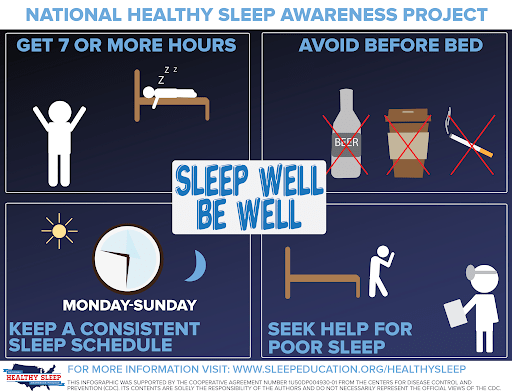
The Mental Health Foundation (2011), raises their concern that people are not achieving enough sleep to maintain their mental health. Dijk et al. (2010), state that adults averagely should be sleeping seven to eight hours per day. However, in reality, how many people sleep a full eight hours a night, with work, children, and schooling to consider. Thus, resulting in them having difficulties in developing personal relationships as they struggle to engage in fruitful conversation, due to exhaustion of the mind.
Many students have to juggle, work, relationships and their degree with multiple deadlines looming, and often struggle to balance these evenly. Therefore, emphasising the importance of maintaining a healthy pattern of sleep, benefiting their mental health, as this could reduce some of the pressures they are dealing with. Zager et al. (2007), remind us, that sleep is vital for our bodies development, as it allows the body time to protect the immune system and process the information we have come across throughout the day. Many students have to juggle, work, relationships and their degree with multiple deadlines looming, and often struggle to balance these evenly.
Furthermore, the Mental Health Foundation (2011), emphasises the need to see poor quality sleep as a public health issue, as it can lead to such a vast number of consequences. Not only mental health issues, but it also leads to accidents, placing others in harm’s way. Mental Health Foundation (2016), recommends the use of a four-step programme that could HEAL or address some of the sleep issues that are occurring. Firstly, consider the body’s health, are there any physical or mental health issues that may be affecting the sleeping pattern?
Sleep matters. People need to review the structure of their bedrooms by adjusting their light and the placement of their bed. Often people struggle with maintaining a good sleeping pattern due to work patterns or shift-based work, therefore, leading them to sleep when possible. Thus, leading to poor quality sleep. Mental health issues such as depression and anxiety can restrict the person from falling asleep or result in waking up several times throughout the night. If someone has any of these health issues, it would be recommended for them to visit their GP for further information and support.
The environment is another factor that needs to be considered. The removal of the television from the bedroom or reducing screen time on tablets and mobile phones before bedtime can improve the quality of sleep, as the mind is active and unable to relax. Although removing of television, maybe deemed dramatic, this vital trick could allow the person to relax, as they begin to associate the bedroom with sleeping, rather than watching television in bed.
Therefore, this links to a person’s attitude. This reflects upon the person reducing their engagement with technology before bedtime. Instead of using technology devices, read a book, or listen to calming music (Mental Health Foundation, 2016). These simple changes could reduce anxiety and allow the person to drift off into a calming sleep state. Using mobile phones or watching television, stimulates the brain, thus, making it more difficult to drift off to sleep. Thus, resulting in a restless night. These simple tasks ultimately lead to lifestyle changes. Mental Health Foundation (2016) recommends dietary changes, including eating less sugary meals and engaging in exercise.
Mahoney and Moos (2010) raised concerns on the leadership and the democracy within schools, expressing the need for change to ensure schools offer the best opportunities for students. The primary role of a school is not only to provide education but also provide a challenging and emotional caring environment, to allow the students to develop (Kapur, 2018; Department of Education, 2015b). The Department of Education (2015b) expresses the importance of Headmasters leading by example, by meeting the four domains of excellence as standard. Those schools branded as inadequate often have leadership and management failures (Hofkins, 1993). The four domains are the self-improving school system, pupils and staff qualities and knowledge and processes. The formation of the school is the leader’s responsibility, ensuring each member of staff is meeting the needs of the students. As inconsistencies could occur, affecting the students’ well-being, and in-turn affect the student’s attainment levels.
Brundrett, Duncan, and Rhodes (2010) state there has been significant change over the last two decades in leadership within schools, with the introduction of multiple levels of leadership roles to ensure additional support for teachers is available. Sheninger (2011) states that education leaders have a multiple-layer of responsibilities, placing immense pressure upon the leaders to be reliable and achieve outstanding results. It is not only Headmasters who are dealing with these stressors, but all levels of leadership are expected to communicate well and demonstrate no inconsistencies. Leaders are under unbearable pressure, as they are expected to maintain consistently excellent teaching, shared knowledge and develop a strong relationship with parents to encourage on-going support and engagement in their child’s education (Education Development Trust, 2014; Department of Education, 2015b).
The Headmasters role as the leaders of the school are considered as the most trusted members of the community, and parents depend upon their ability to maintain the school’s achievements (Day, 2009). Thus, this open position needs to be allocated to the ideal member of staff to maintain trust within the community and ensure success for the school. Engaging and communicating with parents will breakdown the additional barriers to the children’s education, encouraging education at home to occur. Thus, reducing pressure on the teaching staff. Toop (2016) states that the joining of middle leadership and teaching leaders the skill of communicating effectively and sharing ideas will create a unified approach to education.
A clear line of communication needs to be visual, not only with the students and teachers but across all of the senior management team within the school. Therefore, any issues within leadership can be addressed swiftly, and there is no indifference to the approach. Furthermore, Hickman (2017) states that an effective leader collaborates with other members of staff, to release some of the burdens and promote an inclusive involvement and promote engagement with parents. Mistry (2004) expresses the importance of leaders engaging with learning support assistants, as they have been well-established as crucial figures within primary schools, specialising in program prep and interacting with parents.
Matthews (2009) defines outstanding school leaders as motivating, empowering, community-spirited, and promotes professional development. Leaders do not only need to focus upon the children’s well-being but also the staff, to ensure they remain empowered, involved, and feel their leaders value them. Toop (2016) shares the need for a drive in all teaching staff and leaders to build an expectational team approach. To ensure drive remains, leaders need to generously offer praise when it is due and offer opportunities for further training. Hickman (2017) emphasises the importance of leaders complimenting their staff, to boost morale, build confidence, and ensure staff wishes to remain in employment there.
Ofsted (2008, in Matthews, 2009) recognises leadership as remaining as a critical factor to ensure the school’s success. Leaders need to be willing to engage in competition with other schools, competing for the best teachers, and presenting themselves to the community, as the highest achieving school. To do this, Kapur (2018) explains the schools need to design their aims and objectives upon the communities voiced concerns. The leaders are expected to be an inspiring, enthusiast, and be able to communicate with staff, students virtually, and parents (Matthews, 2009; Pont, Nusche, and Moorman, 2008). Leaders are expected to visualise a positive future for both the school and the local community by sharing their ideas and engaging with parents. Thus, in doing so, demonstrating that the school is listening to their local area, encouraging parents to view the school as inclusive. An exceptional vision will ensure that schools achieve. Pont, Nusche, and Moorman (2008) explain the need for schools to devise a plan of action and monitor their progress and celebrate their successes within the community.
Vast improvement has been made over the last fifteen years, as schools are reforming their leadership, due to the number of students attending is rapidly growing, with class sizes growing yearly. The Department for Education (2011) states there has been a growth of 20% in births from 2002, placing further pressure upon the education system. The Department of Education (2011) expresses concern on the increasing class sizes, as it affects attainment levels as there is an increased risk of behavioural problems. Thus, placing further pressure upon middle leaders and Headmasters as they will have restricted time to engage with students and limited engagement with teachers. However, leaders will be able to review whether their teachers can manage and retain student’s engagement successfully.
An expressive, a more decisive leader can change the school’s foundations. School leaders need to have the ability to adapt to change, and transform the education system within their schools, tackling issues head-on (Chugh, 2016). The Department of Health (2015b) expresses the importance of good leadership, stating that if the leaders do not possess the expected characteristics, they will struggle to maintain stimulating education for the children. However, it can be challenging to remain a strong leader due to the complexities of the role. Leaders are expected to challenge their employees yet still motivate them and expect high expectations, with minimum pay incentives. Although the Department of Education (2019) announced a pay increase of 2.75% per cent, the expectation of high achievements with minimum growth could take its toll, affecting the willingness and engagement levels of the staff, which the leaders must challenge. Leadership is a pivotal part of ensuring school success, as it provides the school with a precise aim. The quality of the leader influences the school’s progression and the students learning, thus the importance of evaluating their skills (Plowright and Godfrey, 2008; Barrett-Baxendale and Burton, 2009). Barrett-Baxendale and Burton (2009) believe that leaders need to keep engaging in self-directed development to enhance their leadership skills. Thus, being able to address new issues which are arising. For instance, cyberbullying is a relatively new issue that schools are tackling. If the leaders are unaware of this phenomenon, they will be unable to provide adequate support to their teacher or their students. Thus, resulting in additional issues or the problem escalating out of control.
To maintain strong leadership, Warin (2017) explains the leaders need to develop a nurturing relationship with the students, creating a profoundly caring environment; creating the ideal ethos of a caring school. Thus, resulting in a safer atmosphere for students to discuss any mental health issues. The Department for Education and Gibb (2016) stress the need for a vision leads Headmasters to drive schools to success. However, the Department for Education and Gibb (2016) states that school systems are unable to become dependent upon a handful of individuals, it needs to have an integrated approach of strong leadership filtering to the core of the classrooms as school leadership is the essential element of the school environment. The Ambition Institute (2016) argue that all leaders from middle leaders, governors, Headmasters, and CEO’s need to be ensuring the students are receiving a high-quality education.
Failure is apparent for the leaders, leaving them disheartened; however, efficient leaders will see this as an opportunity to improve themselves. Thus, allowing them to learn from their mistakes. Leaders working in schools in highly challenging socioeconomically disadvantaged communities are at higher risk of failure, due to the on-going challenges of staff retainment and student behaviour (Education Development Trust, 2014). Although, if the leaders restructured their curriculum, students would have a higher attainment level. The flexibility of the leaders to allow teaching staff to use a range of different teaching skills will encourage staff to remain engaged in the students learning. To ensure the youth of today reach their potential, the Department of Education (2015a) states schools need to maintain effective governance and leadership by developing a co-ordinated approach into building upon their foundations and offer support to staff to enable them to achieve in their roles successfully. Leaders need to provide additional support for teachers to ensure they can provide one to one support to students if needed (Chroninin, 2013). As without tailored support, a student who is struggling may begin to disengage with teachers.
Barrett-Baxendale, D. and Burton, D. (2009) Twenty-first-century headteacher: pedagogue, visionary leaders or both? School Leadership and Management. 29(2). Pp. 91 – 107
Brundrett, M., Duncan, D. and Rhodes, C. (2010) Leading curriculum innovation in primary school’s project: an interim report on schools’ leaders in curriculum development in England. Education 3 – 13. 38(4). Pp. 403 – 419
Chugh, S. (2016) Positioning school leadership in Indian Context: Review and Way Ahead. Indian Journal of Educational Research. 5. Pp. 226 – 243
Chroninin (2013) agrees that there are numerous challenges facing teachers, affecting their ability to plan their lesson and dedicate efficient time as required to each student.
Day, C. (2009) Building and sustaining successful principalship in England: the importance of trust. Journal of Educational Administration. 47(6). Pp. 719 – 730.
Mistry, M. (2004) Managing LSA’s: an evaluation of the use of learning support assistants in an urban primary school. School leadership and management. 24(2). Pp. 125 – 137
In 2019, World Mental Health Day provided a stark reminder that modern society depends on social media, and reality shows harm people’s mental health. Reality shows have graced our television screen since the early 1990s; however, it was not until the 2010s that they began to dominate households with their dramatised real-life situations. Although they are unscripted, much of the drama is exaggerated, and actors have to re-act scenes several times to ensure they are filmed in good quality, creating an unrealistic portrayal of life. It is, therefore, distorting the viewer’s understanding of what is real.
Society has become fixated on reality television, as it provides a means of escape for many. Consequently, it does propose a risk across social media, as it socially creates an unrealistic image of the perfect body and perfect lifestyle. The average body size in the U.K. is 16, yet the contestants in reality shows are rarely beyond a size 8, thus, creating unrealistic representations of women’s body sizes and beauty. Similarly, men are usually displaying perfect toned bodies and sharp looks. These altered images are increasingly affecting the way people look at themselves and others, resulting in people becoming displeased with their physical appearance and, at times leading them to act based on a distorted perception of what beauty is. Although Safeline (2019) states that many people may understand images are being altered, they are unaware of the extent.
Reality check
Every day the media transmit messages of what society’s body expectations are, which could impact on the minds of young people, who may then struggle with not meeting these standards. Reality programmes focused on dating and relationships such as Married at First Sight, Love Island, and Take Me Out all fixate on the appearance of the participants, usually using their bodies to find love. Reality shows are fast becoming the most-watched programmes, and participants are regularly used as promotion tools for clothing, diets, and exercise videos, following departure from their subsequent shows. Reality stars promoting ‘fad diets’ or ‘media diets’ have had a massive impact on people’s buying habits.
Society has become celebrity-saturated and has dramatically changed the lifestyle of millions, as people purchase and attempt to adapt their lifestyle to enhance their bodies (Lewallen, Miller and Behm-Morawitz, 2015). However, these expectations are unrealistic, with extensive cosmetic surgery, specialist lighting, and makeup cleverly utilised to further enhance their image. Those proposing (or “sponsoring”) these images are also caught in a loop of having to present themselves in a certain way; otherwise, the result would be a media frenzy, causing people to question the influencers’ personal life whenever they happen to have “an off day.” Girls in Westernised countries are exposed to more social media, and this may be affecting their self-esteem. Dove Global Girls Beauty and Confidence Report (2017) state that although globally 46% of girls had high body esteem, the U.K. had one of the lowest figures with 39%.
An image speaks a 1000 words.
Television has long been part of the centre point of the home, thus potentially having the ability to impact significantly, both positively and negatively. With children having unlimited access to technology within the Westernised World, early messages could be transcribed into negative connotations with body image (Sarwer et al. 1998), affecting into adulthood, as the person may then watch reality television, placing further pressures on body image. Consequently, Cash (2002) explains that these social messages influence the expectation of physical appearance and how this is determined into value within society.
Nowadays, the overbearing use of social media and reality shows has become one of society’s biggest downfalls. For example, when people have downtime, they scroll through images on social media that have been carefully edited to create the perfect selfie. Although the images may not directly state this, the culture derived from the overly photo-shopped pictures, additional trimming of body shape, and the introduction of influencers, slowly encase our social media with an unachievable, unrealistic and unhealthy image of the perfect body. Thus, creating an unbearable pressure on people to match a body type that is liked by society, causing severe long-term health issues. Wing and Phelan (2005) express concerns that attempting to lose weight and maintaining the loss dramatically could lead to long term mental health issues, such as depression. Furthermore, Sabbagh (2019) suggests there is a concern on the credibility of information or tips shared by influencers, as one in nine U.K. influencers provided information and adherence to nutritional guidance. Thus, suggesting that many people may fall victim to false information to achieve the perfect body, placing their health at risk.
Many people are raised to love themselves, to be proud of their achievements, and celebrate everyone’s successes by their parents, teachers, and loved ones. However, at times, society seems to expect us to focus more on appearances and uniformity, comparing ourselves to others, rather than celebrating differences. Watching shows focusing on the beauty of their participants; young viewers become more self-conscious.
Beyond gender
Modern society has led to people having the inability to escape idealistic images, as they are present on television, social media, magazines, and billboards (Schooler and Ward, 2006), chipping away at people’s self-esteem throughout the day. Men also suffer from body-image shaming, as Lamarche et al. (2017) explain that they feel pressure to measure up to societies’ standards of a muscular, strong man. Thus, leading to a heightened risk of mental health issues in young men, as they struggle to understand or comprehend the body insecurities, they will experience due to society (Lamarche et al., 2017). Bee (2010) states that men are equally influenced by the media, comparing themselves to the muscular body type often showcased.
Furthermore, Bee (2010) explains that this misrepresentation of men in the media has resulted in an increase of young men adopting unhealthy and strict diets to achieve the muscular image. Thus, causing grave harm to their bodies. It was identified in Credos (2016) study’ Picture of Health’ that 41% of boys felt the images presenting men in the media were unrealistic. Furthermore, the study expressed concern on the amount of pressure to achieve this glorified idealistic look, affecting the boy’s body confidence as they have yet to achieve this expected look of a man. This has led to 29% of young boys struggling to have the confidence to discuss body image with their parents, increasing the risk of mental health issues as they may be a risk of low self-esteem resulting in depression (Bee, 2010).
Changing the approach
Clearly, the problem aligns with both genders and, as such, requires a united response. Fundamentally, society should assist in shaping confidence and feeling comfortable in one’s skin. The increasing number of young people struggling with their body confidence and image, opting for plastic surgery or developing eating disorders, emphasizes that society strongly influences people’s lives. Wen (2017) states that there is an increasing number of young people undergoing cosmetic procedures due to celebrities’ direct and indirect influences. Wen (2017) explains further that the attitude toward cosmetic surgery has changed since the growth of celebrities. Abraham and Zuckerman (2011) explain that people tend to want to mimic their favourite celebrities, buying into the same clothes, hairstyle, and even opt for cosmetic surgery. Young adults are electing to undergo these surgeries, as they feel the celebrities have had a significant and positive effect upon their lives (Maltby and Day 2011).
Following their reality stint, some contestants are awarded their own television shows, following their lives and develop fitness DVDs, losing weight with 5-minute workout programmes within 12 weeks. Muscle Foods (2017) questions whether these are ethical, as they are sold upon the hype of the star rather than their effectiveness and reliability, whether the star loses weight or not. Muscle Foods (2017) reminds society that these stars are provided with expert guidance, and do not rely solely upon their new DVD workout. Viewers who may not achieve their goal within the expected time will be subject to further distress. Instead, society needs to encourage people to love themselves and not compare themselves to reality stars or other celebrities.
The images that are promoted in the media need to change, as these are increasing the risk of mental health-related problems. These images affect people’s confidence and self-esteem, thus, leading the person to be unhappy with their body. The portrayal of these “perfected” images needs to be addressed, as they can encourage destructive behaviours, affecting mental health and the wellbeing of millions. To tackle this issue, transparency is needed, explaining which images have been altered and to what extent. Emphasis needs to be placed back on the portrayal of natural beauty: consequently, natural beauty needs to be celebrated.
Reference List:
Abraham, A. and Zuckerman, D. (2011) Adolescents, Celebrity Worship, and Cosmetic Surgery. Journal of Adolescent Health 49(5). Pp. 453 – 454
Bree, C., J. (2010) The contemporary body image of men. Do looks outweigh the importance of being healthy? Available at: http://arno.uvt.nl/show.cgi?fid=114683 (Accessed August 15th, 2019).
Cash, T. F. (2002). Cognitive- behavioural perspectives on body image. In T. F. Cash, & T. Pruzinsky (Eds.), Body image: A handbook of theory, research and clinical practice (pp.38-46). New York: The Guilford Press
Green, S.P. & Pritchard, M.E. (2003), Predictors of Body Image Dissatisfaction in Adult men and Women, Social Behaviour and Personality, 31(3), 215-222.
Lamarche, L., Ozimok, B., Gammage, K. and Muir, C. (2017) Men respond too: The effects of a social-evaluation body image threat on shame and cortisol in University Men. 11(6). Pp. 1791 – 1803. Doi: https://doi.org/10.1177/1557988317723406
Lewallen, J., Miller, B., and Behm-Morawitz, E. (2015) Lifestyles of the rich and famous: Celebrity media diet and the cultivation of emerging adults’ materialism. Mass Communication and Society. 19(3). Pp. 253 – 274. Doi: https://doi.org/10.1080/15205436.2015.1096945
Maltby, J. and Day, L. (2011) Celebrities worship and incidence of elective cosmetic surgery: Evidence of a link among young people. Journal of Adolescent Health. 49. Pp. 483 – 489
Sarwer, D. B., Wadden, T. A., Pertschuk, M. J., & Whitaker, L. A. (1998). The psychology of cosmetic surgery: A review and reconceptualization. Clinical Psychology Review, 18(1), 1-22.
Schooler, D. & Ward M.L. (2006), Average Joes: Men’s Relationships with Media, Real Bodies, and sexuality, Psychology of Men & Masculinity, 7(1), 27-41.
Wen, N. (2017) Celebrities influence and young people’s attitudes towards cosmetic surgery in Singapore: The role of parasocial relationships and identification. International Journal of Communication. 11. Pp. 1234 – 1252
Wing, R. and Phelan, S. (2005) Long-term weight loss maintenance. The American Journal of Clinical Nutrition. 82(1). Pp. 222 – 225. Doi: https://doi.org/10.1093/ajcn/82.1.222S










 Natalie Quinn-Walker